
Technical · Apr 2026
Oily waste: how to treat sludge and oily residue safely
Certified processes for the treatment and disposal of oil-contaminated waste.
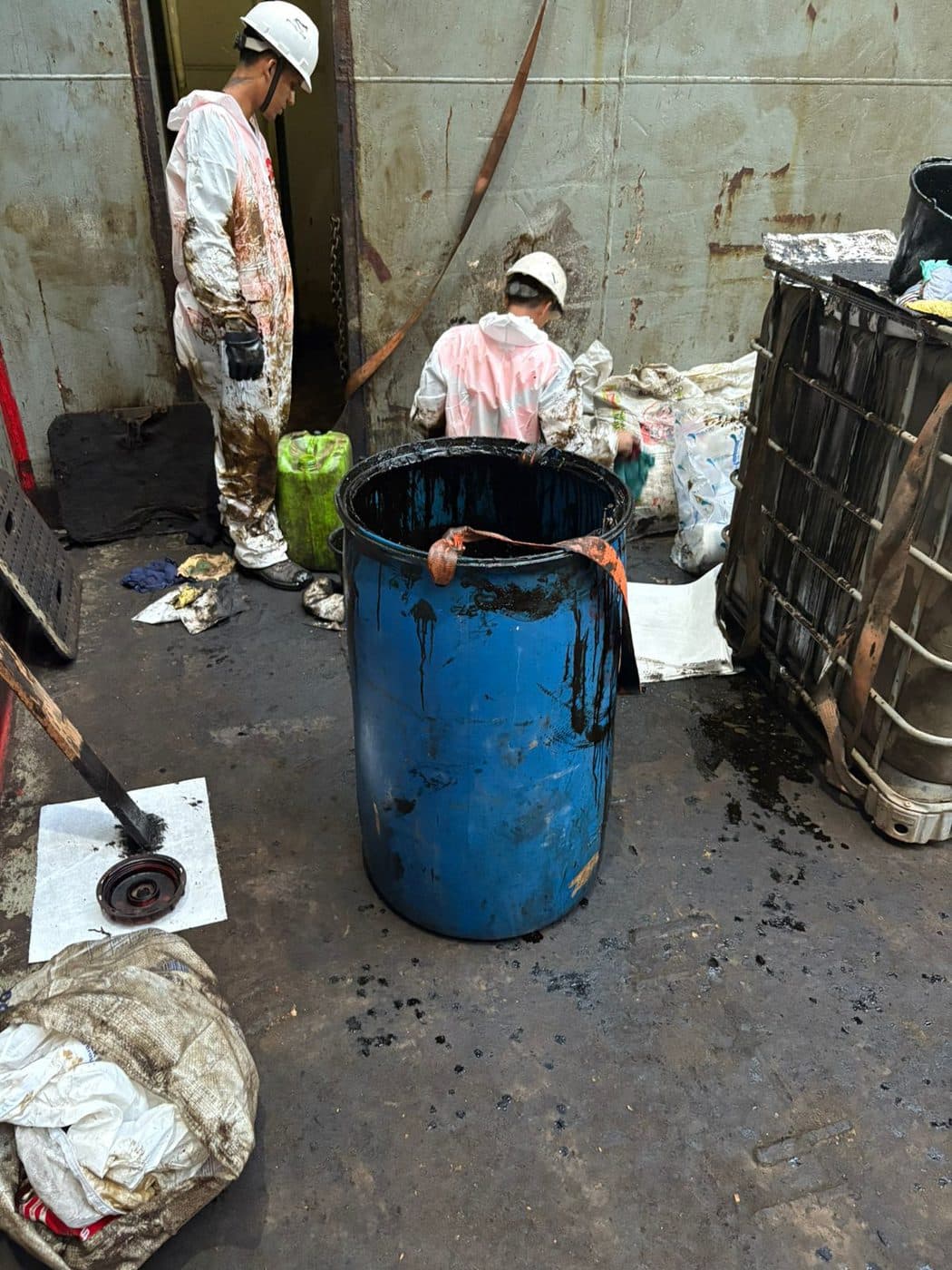
Sludge, oily residue, bilge water and effluents contaminated with hydrocarbons are among the most sensitive wastes generated in maritime and industrial operations. Because they concentrate oil, they demand handling, transport and disposal under strict rules, with no room for improvisation.
What oily waste is
The term covers a broad family: tank-bottom sludge, oily mixtures from engine rooms, oily bilge water, oil-water separator sludge, and soils or materials contaminated by spills. The common factor is the presence of oil, which classifies the material as hazardous waste (Class I).
The legal requirement
In Brazil, the Oil Law (Law No. 9,966/2000) and CONAMA resolutions establish that such waste may under no circumstances be discharged into water bodies or onto the soil. It must be collected, transported by a licensed company and routed to treatment or disposal authorized by the environmental agency.
How treatment works
The first step is usually the physical separation of water, oil and solids. The recovered oily fraction can be reused (for instance, as alternative fuel in co-processing or re-refining) while the aqueous fraction goes to effluent treatment and the solids to proper disposal.
This sequence turns a hazardous liability into something controlled and partly recoverable, reducing the volume that needs final disposal.
Treating oily waste is not just discarding it: it is separating, recovering what has value and proving every kilo disposed of.
Safety and traceability
The whole process must be documented. The Waste Transport Manifest (MTR) and the Final Disposal Certificate (CDF) prove to the authorities that the waste left the source and reached the correct destination. Without them, the generator remains liable even after collection.
Clean Ship's role
With a fleet and licenses specific to hazardous waste, Clean Ship collects oily waste with vacuum trucks, transports it safely and routes it to licensed treatment facilities, delivering the full documentation that proves the operation's compliance.
Get in Touch
Need an environmental solution?
Request a quote or reach our 24/7 environmental emergency team.